
6
Implementation areas
6
Workflow stages
Zoho One
Implementation platform
Care
Non-medical service context
The operating challenge
Keep the referral connected to the service actually delivered.
Before service begins, the agency needs an agreed plan, the right documents, an eligible caregiver, and confirmed coverage. After a visit, it needs a dependable record of what happened, what needs attention, and what finance can review. The challenge is maintaining those connections as plans, people, and needs change.
A referral needs a coordinator and a visible next follow-up action.
A scheduled visit is not the same as an eligible, confirmed assignment.
Actual service and task evidence need verification independently of the schedule.
Billable service and payable workforce time require separate reviews.
Operating-system design
Readiness and evidence guide each handoff.
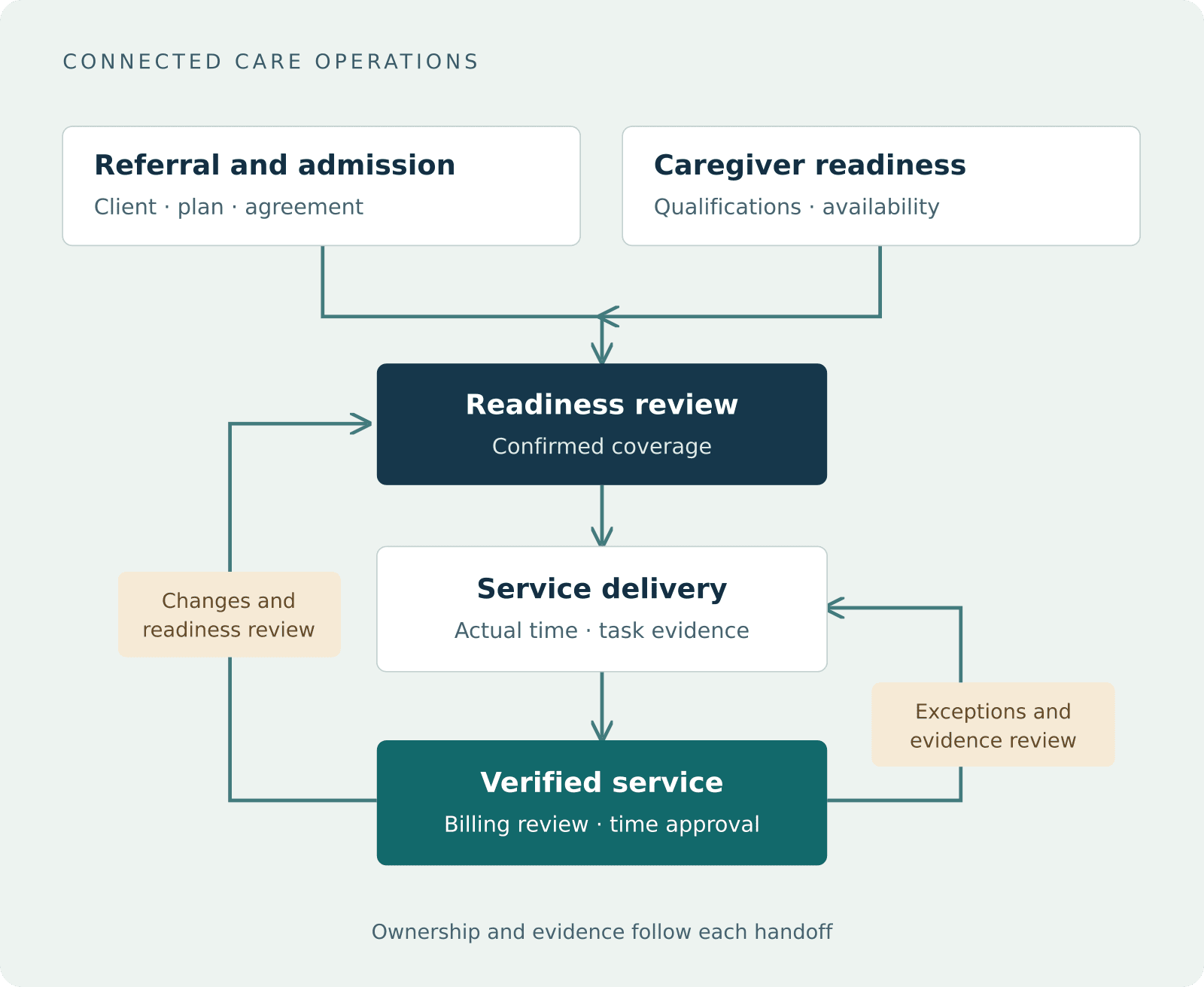
The operating model connects admissions, workforce coordination, and service episodes through named owners and explicit next actions. Admission readiness informs service activation; caregiver eligibility informs assignment; visit evidence informs billing review; current representative authority informs family updates.
Resolve missing admission prerequisites before service activation.
Record caregiver confirmation as part of establishing coverage.
Preserve original visit records when documenting corrections.
Check a recipient's current authority before sharing a family update.
Keep specialist clinical, electronic visit verification, and payroll systems in their established roles where applicable.
Zoho CRM
Referral relationships and shared intake.
Zoho Creator
Admissions, workforce coordination, and service operations.
Zoho Sign and WorkDrive
Agreements and restricted supporting evidence.
Zoho Desk
Routine service requests connected to the relevant service episode.
Zoho Books
Billing review and accounting records.
Zoho Analytics
Management reporting on readiness, coverage, exceptions, and billing holds.
Specialist systems
Clinical, electronic visit verification, and payroll systems retain their established responsibilities where applicable.
Control Points
The lifecycle is controlled where operating risk changes.
Each point combines an authoritative record, accountable owner, prerequisites, evidence, decision state, and recovery behavior.
01
Referral and admission readiness
Bring referral sources, inquiries, and follow-up into shared intake. Link each admission to the client, payer, authorized representatives, assessment, service plan, and agreement. Keep missing prerequisites visible before activation.
02
Caregiver readiness and coverage
Consider employment status, service requirements, valid qualifications, availability, and client restrictions. Record caregiver confirmation and preserve call-out and replacement history so uncovered visits stay visible.
03
Visit evidence and exceptions
Keep the schedule separate from the delivered-service record. Actual times, task outcomes, and supporting evidence enter verification; missing documentation and unresolved discrepancies enter an owned exception queue.
04
Family communication and changes
Connect routine requests to the service episode. Review updates against the recipient's current authority, and record reviews of plan, schedule, and service-status changes.
05
Billing preparation and workforce time
Use verified service, effective rates, and unresolved holds for billing review. Workforce time follows a separate approval and payroll handoff, preserving scheduled time, delivered service, billable units, and payable time.
06
Management visibility
Surface referrals awaiting action, admission blockers, coverage gaps, expiring qualifications, and billing holds. Managers can trace an exception to its owner and underlying records.
illustrative workflow
A missing check-out record stays visible until reviewed.
Illustrative service review: a scheduled visit has incomplete check-out evidence. The workflow preserves both the service history and the independent workforce-time review.
01
Capture the referral
Record the source, requested service, urgency, coordinator, and next follow-up action.
02
Establish readiness
Link the assessment, approved plan, agreement, payer, and representative authority. Resolve missing prerequisites.
03
Confirm the caregiver
Check eligibility and availability for the visit, then record the selected caregiver's confirmation.
04
Record the service
Preserve actual times, task outcomes, and evidence alongside the original schedule. The visit remains visible even when its check-out record is missing.
05
Resolve the exception
Incomplete evidence creates a review task and billing hold. A supervisor resolves the discrepancy, retains the original record, and documents the correction.
06
Prepare independent handoffs
Finance reviews the supported service charge. Workforce time is reviewed separately, so a billing issue does not automatically reject time worked.
continuity and control
Keep the context when service needs change.
Each review links the responsible person to the relevant records, current authority, evidence, and next action.
Coverage history
Call-outs and replacements retain their history rather than silently rewriting the original assignment.
Evidence corrections
A documented correction preserves the original visit record and the reason for the change.
Communication authority
Family updates are reviewed against current recipient authority for the service episode.
Independent time review
Billing readiness and workforce-time approval remain distinct so one exception does not automatically determine the other outcome.
delivered scope
Connected referral, workforce, and service operations.
InsightVector implemented the Zoho One workflow described here. The portfolio documents operating responsibilities and controls rather than quantified service, financial, or clinical outcomes.
Referral-to-service workflow
Shared intake, admission prerequisites, caregiver confirmation, visit records, exception review, and finance handoffs.
Separate decision records
Scheduled time, delivered service, billable units, and payable time retain their distinct meanings.
Connected application roles
CRM, Creator, Sign, WorkDrive, Desk, Books, and Analytics support the process alongside existing specialist systems.
Designed to improve
The operating improvements the system targets.
A visible next action
Coordinators can see which referral or admission needs attention, who owns it, and what prevents progress.
Explainable coverage
Schedulers can distinguish planned visits from eligible, confirmed assignments and follow replacement history.
Evidence behind review
Supervisors and finance can trace verification and billing readiness to records, approvals, and unresolved exceptions.
Continuity through change
Changed plans, family requests, and corrections preserve the context the next person needs.
questions
What buyers usually need to know.
Your next control point
Where does your operating system lose control?
Start with the handoff, decision, evidence, or recovery problem that creates the most friction today.